Conversation · February 10, 2026 · 2 min read
How we choose what enters the fund
The questions behind every decision the fund makes.
The question we hear most isn't about art. It's about how we choose. The answer starts with a set of criteria, but it never ends in a formula.
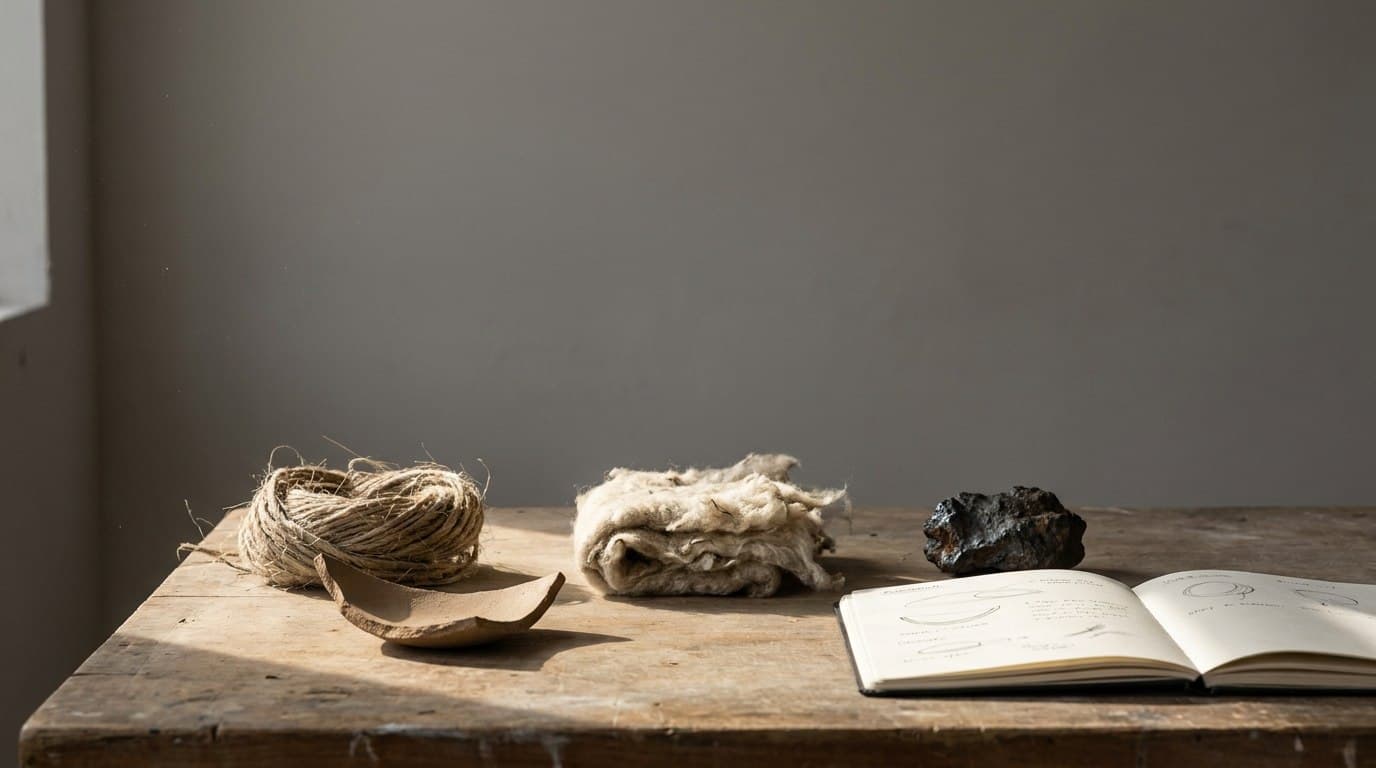
What we do have is a discipline: go to the studios before the galleries. By the time a piece is hanging at an art fair with a figure next to it, the moment to discover it has passed. The interesting part comes earlier: in the conversation with the artist, in the notebook where the idea was born and in the materials they tried and set aside.
Three questions we ask ourselves
First: is the artist responding to an urgent conversation or to a trend? Trends age fast. Conversations still matter thirty years later. Cardoso was making spiders twenty years ago, when almost nobody was thinking about art and biology together. Today that is the language of the moment.
Second: can the work stand on its own? A lot of contemporary conceptual art only works in a white room with a curatorial text on the wall beside it. The work worth having is the one that walks into a boardroom, a clinic or a home and keeps saying something. No text. No context.
Third: can the practice hold up over time? We look for consistency, research and a question that can grow with the artist, not a prediction about how famous they might become.
A work enters the fund for what it can already set in motion, not for a promise about what it might someday be worth.
Daleki Art makes those criteria visible through temporary activations. The spaces that support the movement live with works chosen for their power to change a conversation that is happening now.